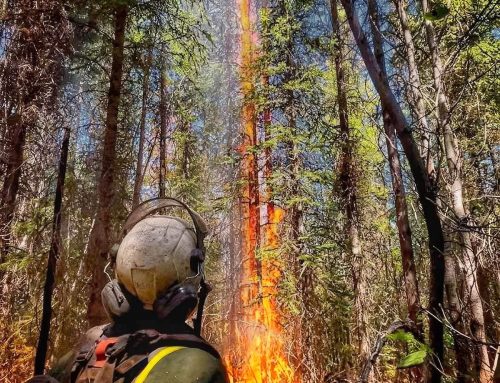
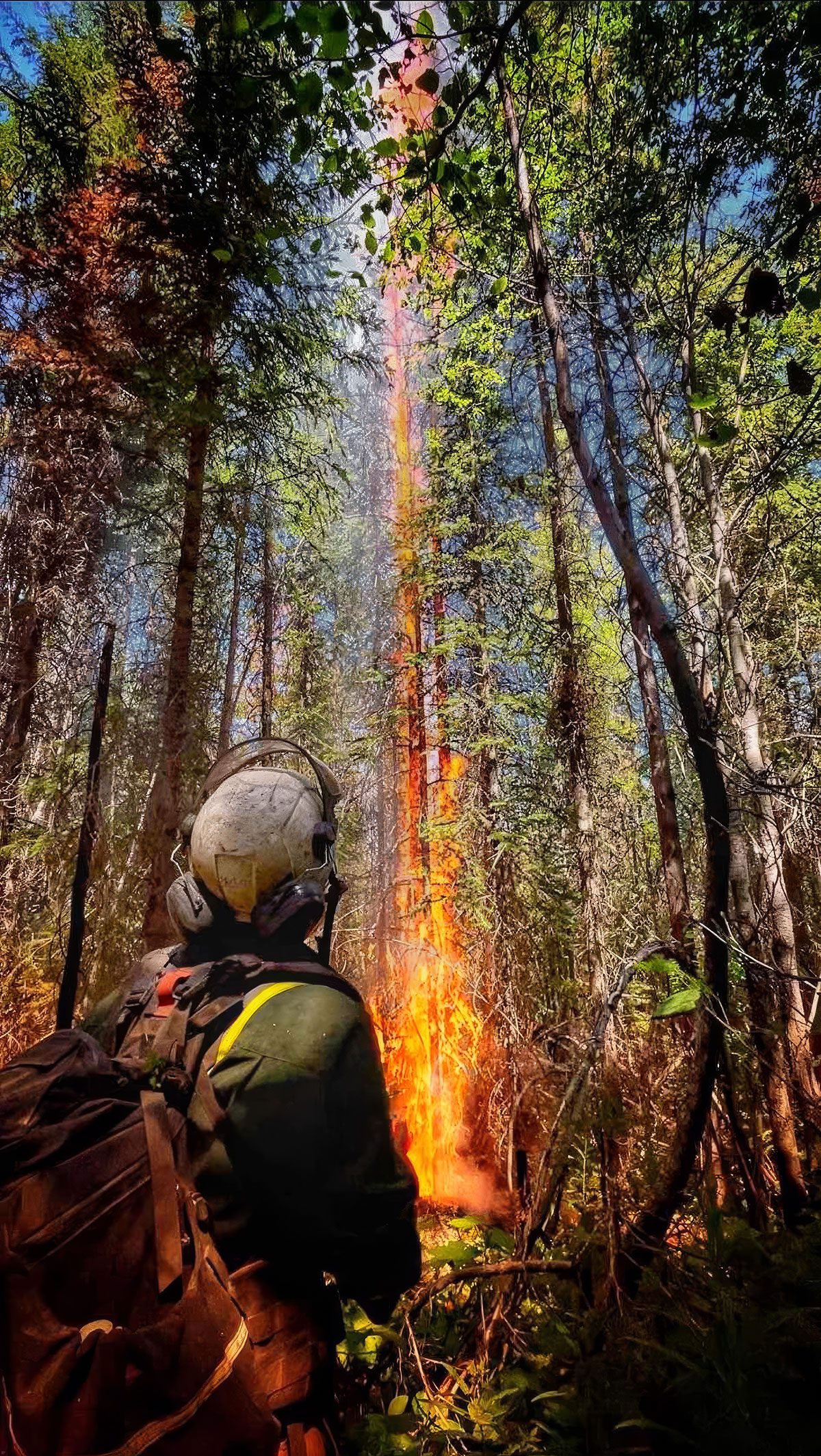
Most of the people on our crews in July started sorting out their tickets in January. So if it’s the off-season and you’re wondering whether you could do this job, you’re not late.
We’re Carmanah Wildfire. We run Type 2 and Type 3 crews, structure protection crews and single resource fallers out of the Coastal, Kamloops, Cariboo and Prince George fire centres, with Southeast coming in 2027, and we also deploy out of province in Yukon, Alberta, the Northwest Territories and Ontario.
What do contract fire crews actually do?
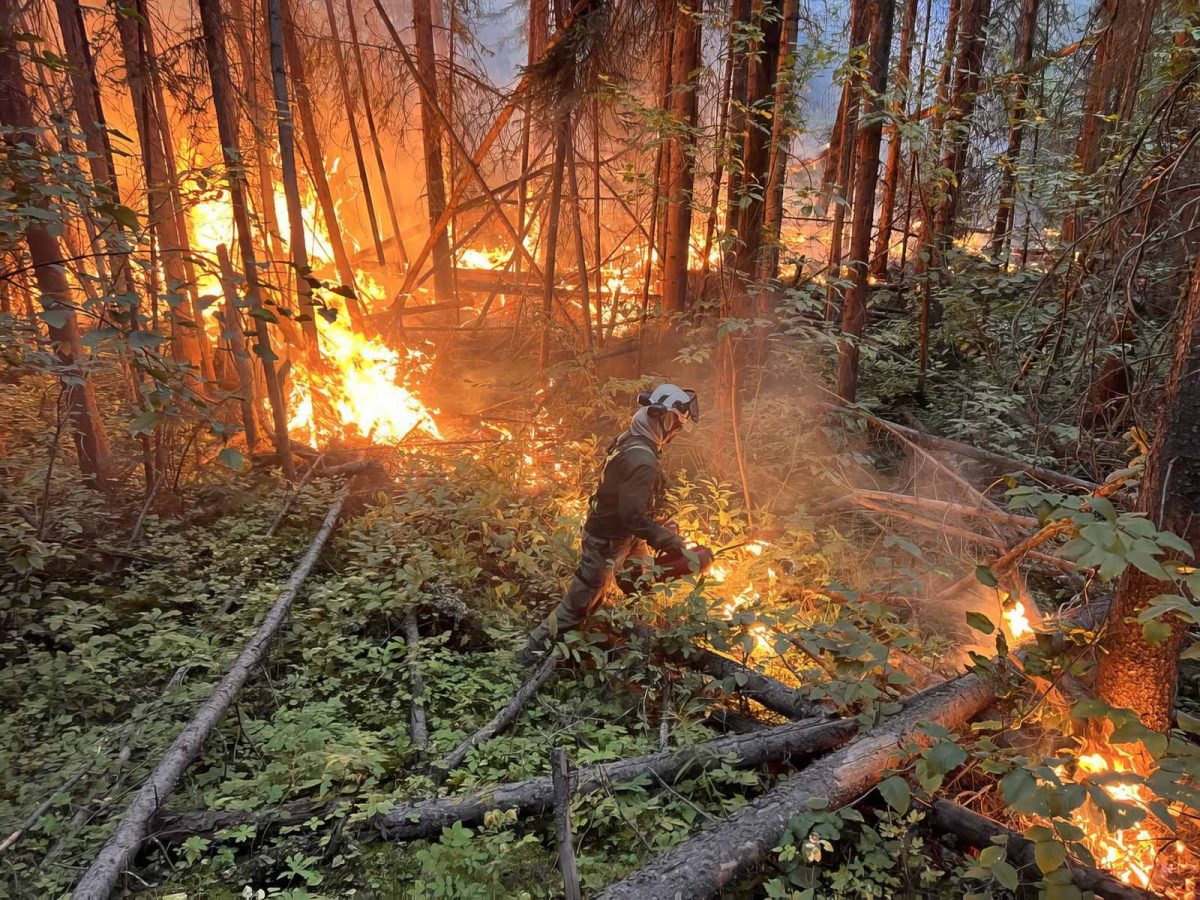
Our Type 2 crews work on wildfire, supporting initial and sustained action. That means flagging line, danger tree assessing and falling, cutting line, building guard, running pumps and setting up hose lays, holding line, hotspotting and patrolling, and supporting structure protection and ignitions operations. Each crew carries its own faller, danger tree assessor and sawyers, so when danger trees choke off the access we deal with them and keep moving. In BC we run 4- and 8-person packs, and out of province we go as full 20-person crews. The technical minimum for Type 2 is 17 fireline days, but we like to see 28.
Our Type 3 crews run 5, 10 and 20 people and stay with a fire through sustained action, mop-up, patrol, equipment moves and demob. People undersell mop-up. It’s gridding a slope on your knees in August, cold-trailing and digging out roots still cooking underground, and it’s how a fire actually stays out. Outside fire season we keep our people working together on FireSmart and fuel projects.
Tickets
S-100 Basic Fire Suppression and Safety is the floor. BCWS calls it the minimum wildfire training in the province and you can’t work a BCWS-managed fire without it. It’s part classroom, part field, and you keep it current every year with the S-100A refresher.
S-185 Fire Entrapment Avoidance is still its own course through 2026. Starting in 2027, BCWS has rolled it into the updated S-100, so new people will take one course instead of two. If you’re booking this winter, ask the instructor which version you’re getting.
First aid. WorkSafeBC renamed the levels in 2024, so OFA 1, 2 and 3 are now Basic, Intermediate and Advanced, and an old OFA ticket is still good until it expires. Everyone on a Carmanah crew holds at least Basic First Aid with Transport Endorsement. Every crew has at least one Advanced First Aid attendant, and our 8-person Type 2 crews carry two. Get your Basic with Transport Endorsement done before you apply. It’s a short course and showing up with it already done says a lot.
Going for Type 2? Add S-211, S-212, S-213, ICS-100, TDG and WHMIS to the list. We run all of that training in-house.
Fitness
The job is hiking steep ground with a pack on, swinging a tool, humping hose up a hill, then getting up and doing it again in the smoke. You can be strong in the gym and still get smoked on day two.
The national test is the WFX-FIT test. Our Type 2 firefighters do it. It’s one continuous timed circuit on a 40 m course, done wearing a weighted belt. First you carry a 28.5 kg (63 lb) pump on your back for 160 m. Then you hand-carry the same pump for 80 m. Then you lift a 25 kg (55 lb) hose pack onto your back and carry it 1 km, over the ramp every 20 m. That’s 50 trips over the ramp. Last is the charged hose advance, where you drag a weighted sled 80 m. The BC Type 2 standard is 17:45 or better, set by the BC Wildfire Service. To go out of province on a Type 2 interprovincial deployment, you need 14:30, the same as the Type 1 standard, so that’s the time we try to hit. You retest every year before the season, usually between February and the second week of May, at testing the fire centre runs. Our Type 3 firefighters do a moderate fitness test: walk 3.2 km with 25 lbs on your back in under 30 minutes.
Training for it isn’t complicated. Load a pack with about 30 lbs and hike, ideally somewhere with some incline, a few times a week. Do it again the next day. Carry awkward heavy stuff. Run some. Give yourself a couple of months at least to get your bush legs, because two weeks of panic training in May doesn’t cut it.
Boot camp
Every season starts with a Carmanah boot camp, and our Type 2 and Type 3 crews go through it together. You’ll dig line, run hose and practise how we move as a crew, and the experienced people mentor the ones coming up behind them. Boot camp is free and open to everyone. It’s our way of giving back to the wildfire community, with a lot more reps than the standard S-100. We’ve been building on it year over year. We all camp on site, eat together, train together and work out together.
It’s really cool to watch a rookie show up not knowing what a McLeod or a progressive hose lay is, and leave confident they’ll know what to do in most situations on the fireline. We’re not here to do the bare minimum. We want to set expectations, get the reps in, and have people step onto the line knowing what to do.
Honestly, tickets and fitness are the easy parts to judge. What we care about most is the crew. Crew cohesion is the name of the game. A crew that trusts each other and looks out for the person beside them is safer and gets more done, and it’s the most important thing we think about when we put crews together. Boot camp is where that starts. At Carmanah, we would rather take on a rookie with good energy and a positive attitude than an egotistical vet who lacks integrity and respect.
When to apply
Rosters come together over the winter and early spring, way before the first smoke. Typically, we open our training window in early January and close it at the end of April. Apply with your courses booked and your fitness already coming along.
We want people who work hard, stay humble and can share a fire camp for two weeks without it getting weird. Big egos don’t last long on a crew. Weird is normal, creepy is not tolerated. Tell us about anything where you worked hard with other people in rough conditions: tree planting, trades, ranch work, sports, the military, a long season of anything. We get a lot of great people out of the ski and snowboard community.
The roles we hire for each season are on our careers page: Type 2 and Type 3 firefighters, Crew Leaders, danger tree assessors and fallers, power saw operators, Advanced First Aid medics, and structure protection (WSPP115).
Your first season
Early wake-up, briefing, long day on the line, eat, sleep in camp, repeat. Deployments run long, usually about 14 days straight. In your first season, you’ll start on a Type 3 crew.
Nobody’s dropping you in the bush alone. Rookies work beside seasoned firefighters on squads run by experienced leaders. Ask questions. Write stuff down. And break in your boots before you show up, because blisters on day one of a 14-day roll are a bad time.
After year one
Plenty of people sign on for one summer and stay. From your first season you can work toward power saw operator, danger tree assessor and faller, or Advanced First Aid, then Type 2 courses like S-211, S-212, S-213 and ICS-100, then Crew Leader and Strike Team Leader. There’s room to move up on our Type 2 crews and our Type 3 crews, and a lot of our next leaders come up through Type 3. Our crews also support prescribed and cultural burns, which is some of the best work of the year.
FAQ
What certifications do I need to be a wildland firefighter in BC?
S-100 Basic Fire Suppression and Safety, plus S-185 Fire Entrapment Avoidance in 2026. From 2027, S-185 is part of the updated S-100. You’ll also want at least Basic First Aid with Transport Endorsement, and you have to pass a fitness test.
Is S-185 still a separate course?
In 2026, yes. Starting in 2027, BCWS has folded it into the updated S-100.
What is the WFX-FIT?
The wildland firefighter fitness test used across Canada. It’s one timed circuit on a 40 m course: a pump carry on your back, a pump hand carry, a 1 km hose pack carry over a ramp, and a charged hose advance. The BC Type 2 standard is 17:45 or better. Type 2 interprovincial deployments need 14:30, the same as the Type 1 standard, and that’s the time we try to hit.
When should I apply to a contract fire crew?
Our training window opens in early January and closes at the end of April. Get your courses booked and start training before you apply.
Do I need fire experience to get hired?
No. Most people start on a Type 3 crew in their first season, and boot camp is where you learn the basics alongside the rest of the crew.