By Lachlan “Lochee” Nuttall, Safety Coordinator, Carmanah Wildfire
Danger tree awareness should be as automatic as buckling your seatbelt.
It means actively scanning the trees around you for signs they could fail, like root damage, hollow trunks or fire-weakened wood, before they have a chance to come down. On a BC fireline, it’s one of the things that gets you home safe.
Here’s what to look for from the roots to the crown, the habits every crew member should build, and how to support your Danger Tree Assessor on initial attack, mop-up or a sustained fire.
What danger tree awareness looks like on the fireline
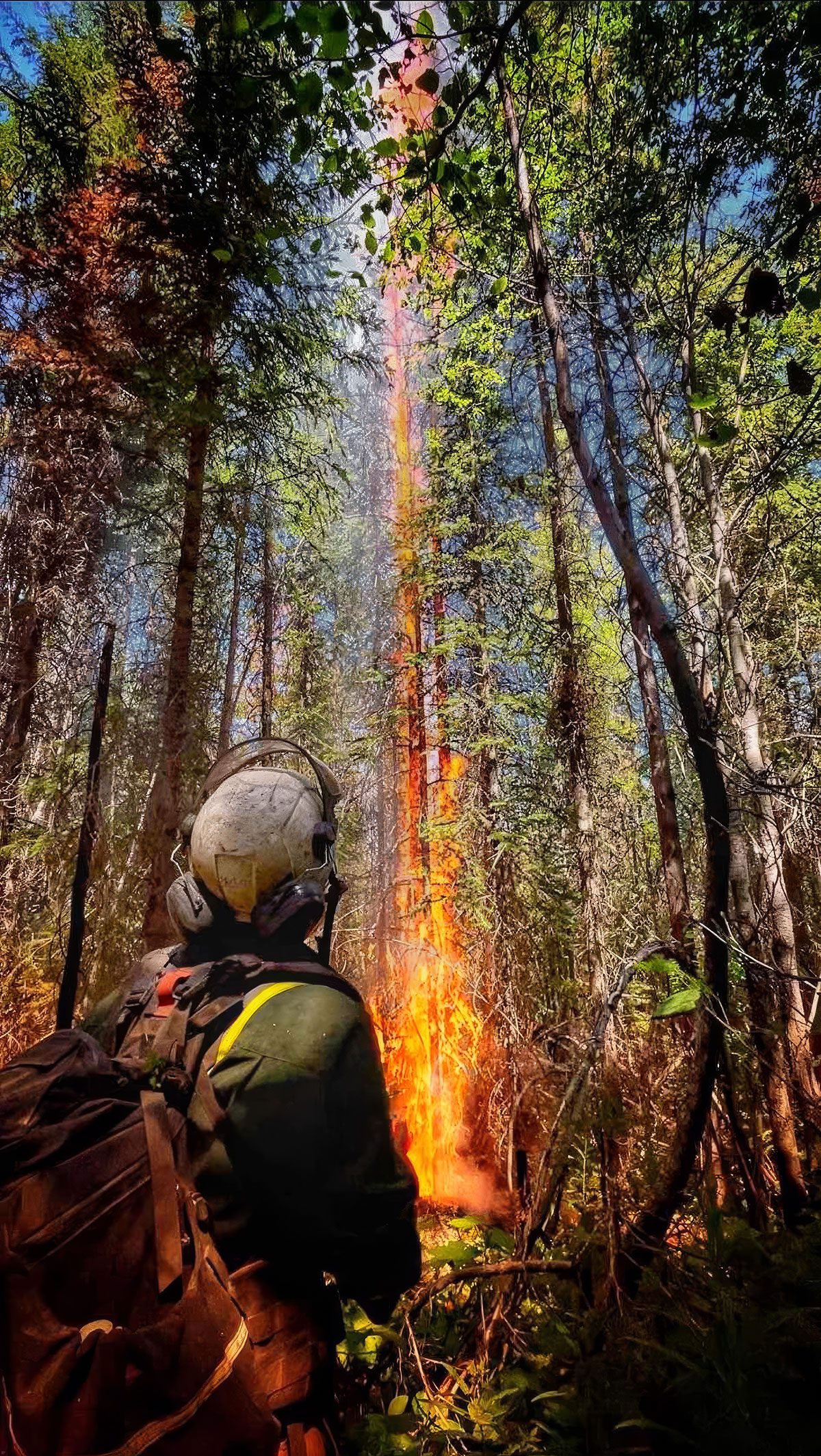
“Head on a swivel.” It’s the first lesson you get in danger tree awareness as a wildland firefighter and, I’d argue, the most important.
I learned it early, on a Type 3 crew in the Prince George Fire Centre. We were patrolling and mopping up a 40-hectare fire that had just been declared Under Control when one of our crew called out, “Watch the tree ahead!” Seconds later, a widowmaker crashed down about 6 metres (20 feet) in front of us. That split-second warning kept the whole crew safe.
Danger tree awareness is a habit, not a one-time check. Under BC’s Occupational Health and Safety Regulation, a dangerous tree is any tree that is a hazard to a worker because of its location or lean, physical damage, overhead conditions, deterioration of its limbs, stem or root system, or a combination of these. Size doesn’t matter, and a tree doesn’t have to be dead to be dangerous.
5 signs of a danger tree to watch for in BC
Before we move into an area, and at any time during a shift, we watch for five key signs:
- Recent lean: Lean that’s new or has changed, often because the roots are compromised.
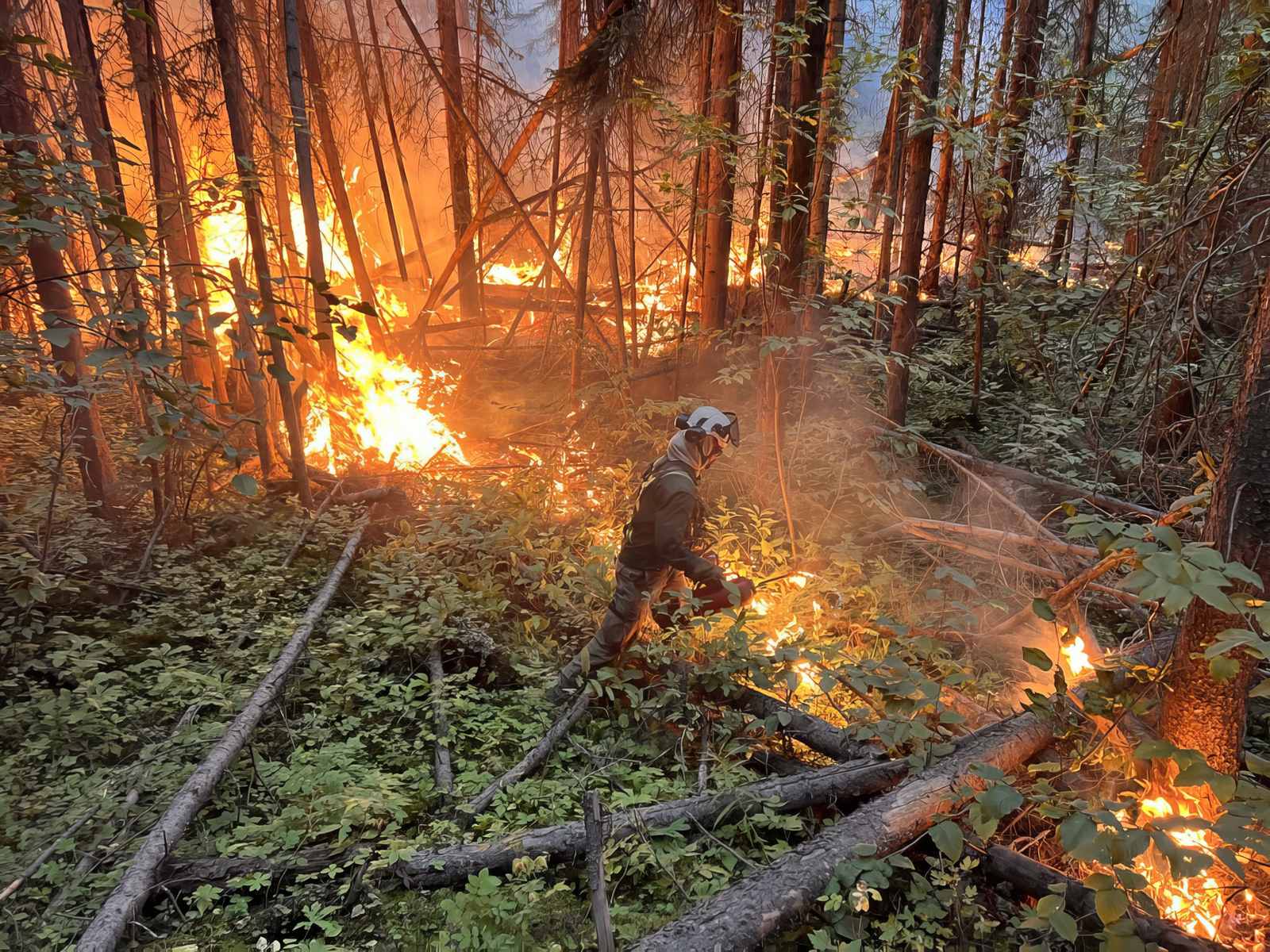
- The base: Deep charring, cavities, cracks, or smoke or flame at the root collar. Fire often does the most damage where you can’t see it.
- The roots and ground: Lifted or shifted root plates, cracked or heaved soil, ash pits and voids around the base.
- The top: Broken tops, dead limbs, widowmakers and anything hung up in the crown, including trees leaning into other trees.
- What’s changed: Wind, a storm, rotor wash or something falling nearby can turn this morning’s safe tree into this afternoon’s hazard.
Tree size, defect type, species and site conditions also play a role, so always consider the full picture.
What happens when we spot a danger tree: the assessor’s role
Every crew member needs danger tree awareness, but you also need to know where awareness ends and a certified Danger Tree Assessor’s job begins.
If you spot any of these warning signs, act fast. Keep yourself and your crew clear, and report it right away to your crew leader or the designated Danger Tree Assessor. The assessor then looks beyond the obvious, at the roots, stem and crown, and at the site’s history, the type of work planned and how much ground disturbance it will cause. They decide whether the tree is safe, needs to be felled, or needs a No Work Zone, and that call guides the crew’s next steps.
Safety is a team effort: awareness from every firefighter, and assessment from the people qualified to make the call.
7 habits every new crew member should build
These are the habits we expect from every new crew member:
- Walk the ground first. Step back and look at the whole site, including stand history and condition, before looking at individual trees.
- Look up, look down and look around. Check the crown, the base and the roots on arrival and whenever conditions change.
- Treat any suspect tree as dangerous. Until it’s been assessed or dealt with, assume it can come down.
- Know what a tree could reach. A tree outside your immediate work area can still reach you, your hose lay, your escape route or a power line. A good rule of thumb is at least one tree length, and more on a slope.
- Respect No Work Zones. The flagging is there for everyone’s safety. Never walk through or around a No Work Zone.
- Call hazards. “Tree!” gets people looking. Be loud, be specific, and know your escape route before you need it.
- Know your limits. If you’re not qualified, or you can’t control the hazard, stop and report it.
How Carmanah crews put danger tree awareness to work
Our goal is simple: every worker goes home safe and healthy after every shift, every deployment and every fire season.
New crew members learn these basics before they work around fire-damaged trees, and our danger tree procedure is written around what every firefighter needs to know, not just what assessors do.
That’s the mindset our Type II and Type III wildfire crews, fallers and danger tree assessors bring to every job in BC, whether they’re on a fire, supporting a prescribed burn, or doing vegetation management or FireSmart wildfire mitigation work.
Danger tree FAQs
Who can assess danger trees on a BC wildfire?
Only someone who has completed a training program acceptable to WorkSafeBC, as set out in WorkSafeBC’s guideline G26.11. For wildland fire, that’s the Wildland Fire Safety module of the Wildlife Dangerous Tree Assessor’s Course. Awareness training helps you spot the signs, but it doesn’t qualify you to assess or fall a tree.
What should you do if you spot a suspect tree?
Stay well clear, alert your crew and report it to your crew leader. Don’t push, cut or test it. Treat it as dangerous until a qualified person has looked at it.
Can a tree become dangerous after it’s been assessed?
Yes. Wind, rain, fire, bucket drops and nearby work that changes the level of disturbance can all affect a tree’s stability. Get it reassessed when conditions change.
How do I become a certified danger tree assessor in BC?
Take the Wildland Fire Safety module of the Wildlife Dangerous Tree Assessor’s Course. It’s a two-day course delivered through UNBC Continuing Studies, with classroom theory, field exercises and a qualifying written and field exam. See the Province of BC’s assessor course page for details.
What are the prerequisites for the wildfire assessor course?
It isn’t an entry-level course. You need several years of relevant field experience, BC tree identification and measurement skills, plus recent fireline or danger tree assessment experience. Check UNBC’s current requirements before you register.

Leave A Comment